

Inflatable Rubber Void Formers vs Traditional Formwork: Which Is Better for Bridge Construction?
Choosing between inflatable rubber void formers and traditional formwork is an important decision in bridge construction, especially for projects involving hollow-core slabs, precast concrete beams, culverts, box sections, and other structural members with internal cavities.
Both systems are designed to shape concrete, but they work in very different ways.
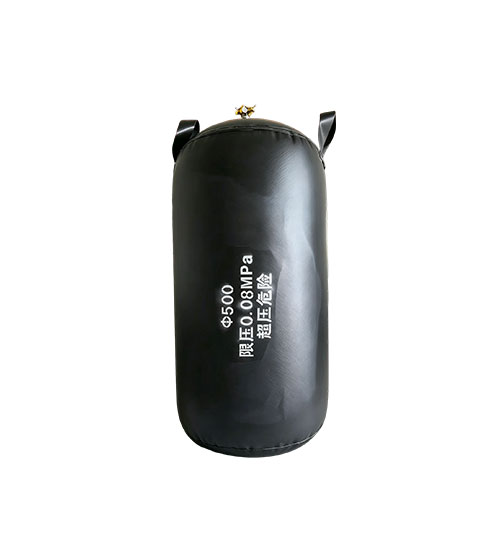
Inflatable rubber void formers are flexible internal molds made from reinforced rubber or rubber-fabric composite materials. They are inserted into the reinforcement cage, inflated before concrete placement, and removed after the concrete gains enough strength to maintain the internal cavity.
Traditional formwork is usually made from steel, timber, plywood, plastic, or rigid composite materials. It provides a fixed mold that supports fresh concrete until the concrete reaches sufficient strength.
So which is better for bridge construction?
The answer depends on cavity geometry, production volume, labor requirements, lifting equipment, project schedule, formwork reuse, dimensional tolerance, storage, transportation, and total project cost.
Inflatable rubber void formers are often attractive for long hollow sections, repetitive precast production, restricted demolding spaces, and projects where lightweight reusable internal formwork is required. Traditional formwork may be preferred where extremely rigid geometry, complex external surfaces, or very high repetition of one fixed shape is required.
This guide compares inflatable rubber void formers vs traditional formwork in bridge construction, including design flexibility, installation, demolding, labor, cost, accuracy, durability, storage, maintenance, safety, and application suitability.
Inflatable rubber void formers are reusable flexible molds used to create hollow spaces inside concrete structures.
They are commonly used in bridge and precast construction for:
Hollow-core bridge slabs
Precast beams
Culverts
Tunnel components
Box structures
Hollow girders
Municipal concrete structures
Special precast elements
An inflatable rubber void former is normally made from reinforced elastomeric material.
The structure may include:
Inner airtight rubber layer
Reinforcement fabric
Outer protective rubber layer
Inflation valve
Before concrete placement, the inflatable rubber void former is inserted into the reinforcement cage and inflated to the specified pressure.
After inflation, the rubber former becomes firm enough to resist the pressure of fresh concrete.
Once the concrete has reached sufficient initial strength, the air is released, the rubber body contracts, and the void former is removed.
The result is a hollow internal cavity.
Traditional formwork refers to rigid or semi-rigid mold systems used to shape fresh concrete.
Common materials include:
Steel
Timber
Plywood
Plastic
Composite panels
Traditional bridge formwork can be used for both external surfaces and internal voids.
Rigid internal formwork may consist of:
Steel mandrels
Timber cores
Fabricated box molds
Removable steel frames
Traditional formwork is widely used because it provides strong dimensional control and predictable geometry.
However, rigid internal formwork can become difficult to remove when cavity openings are small or the void shape is long and continuous.
This is one of the key differences in the comparison of inflatable rubber void formers vs traditional formwork.
Inflatable Rubber Void Formers vs Traditional Formwork: Basic Comparison
A simplified comparison is shown below:
| Factor | Inflatable Rubber Void Formers | Traditional Formwork |
|---|---|---|
| Weight | Lightweight | Often heavier |
| Demolding | Easy after deflation | May require lifting or disassembly |
| Reusability | High with proper maintenance | High for steel, lower for some timber systems |
| Storage | Compact when deflated | Requires larger storage space |
| Transportation | Easier | Often requires more handling |
| Geometry control | Good with correct pressure | Very high with rigid systems |
| Customization | Flexible | Possible but may require fabrication |
| Labor demand | Usually lower for internal voids | Can be higher |
| Lifting equipment | Limited for smaller units | Often required for heavy molds |
| Surface rigidity | Lower than steel | High |
| Best use | Internal hollow cavities | External molds and rigid geometric control |
Neither system is universally better.
The correct choice depends on project conditions.
The operation of inflatable rubber void formers is based on internal air pressure.
The process usually includes:
Place the deflated void former inside the reinforcement cage.
Inflate it to the specified pressure.
Check alignment and dimensions.
Secure it against floating.
Pour concrete around the inflated mold.
Vibrate and compact the concrete carefully.
Allow initial curing.
Deflate the void former.
Remove and clean it.
Reuse it for the next concrete element.
This process is particularly useful where rigid internal molds would be difficult to extract.
Traditional formwork creates a fixed cavity or surface before concrete is placed.
The process usually includes:
Assemble the formwork.
Position it inside or around the reinforcement.
Secure the formwork.
Pour concrete.
Compact and cure the concrete.
Release or disassemble the mold.
Lift or remove the formwork.
Clean and prepare it for reuse.
Traditional formwork can offer excellent dimensional stability.
However, the assembly and removal process can require more labor, equipment, and time.
Comparison 1: Installation Speed
Installation speed can significantly affect bridge construction schedules.
Inflatable rubber void formers are relatively lightweight.
They can often be handled manually or with limited lifting equipment.
The deflated former can be inserted through narrow openings and positioned inside reinforcement cages.
After positioning, inflation is usually quick.
For repetitive precast production, this can shorten installation time.
Traditional rigid formwork may require:
Assembly
Bolting
Welding
Crane handling
Alignment
Bracing
Heavy steel molds may require lifting equipment.
Timber formwork may require repeated cutting and assembly.
Therefore, for internal bridge cavities, inflatable rubber void formers often provide faster setup.
For long internal cavities and repetitive precast production, inflatable rubber void formers often provide an installation advantage.
For complex external surfaces, traditional formwork may remain more practical.
Comparison 2: Demolding
Demolding is one of the biggest differences between inflatable rubber void formers vs traditional formwork.
After the concrete gains enough strength, the air is released.
The rubber former collapses inward.
This reduces its effective cross-section and makes removal easier.
This is particularly useful for:
Long hollow cores
Narrow openings
Curved cavities
Limited access areas
Rigid internal formwork cannot collapse.
It must be:
Pulled out
Lifted out
Disassembled
Removed in sections
If the cavity has limited clearance, demolding can become difficult.
For internal hollow cavities, inflatable rubber void formers generally have a major demolding advantage.
Comparison 3: Weight and Handling
Handling equipment influences cost, labor, and safety.
Inflatable rubber void formers are significantly lighter than many steel molds.
Advantages include:
Easier manual handling
Lower crane demand
Easier transportation
Faster repositioning
Steel formwork provides excellent rigidity but can be heavy.
Large molds may require cranes or forklifts.
Timber formwork is lighter but may still require multiple workers and repeated assembly.
For projects where handling speed and low equipment demand are important, inflatable rubber void formers have an advantage.
Comparison 4: Dimensional Accuracy
Dimensional accuracy is essential in bridge construction.
Accuracy depends on:
Inflation pressure
Material reinforcement
Restraint
Positioning
Concrete placement pressure
If inflation pressure is too low, the former may deform.
If restraint is poor, it may move during casting.
Rigid steel formwork provides excellent dimensional stability.
It is less affected by concrete pressure.
Steel molds are often preferred where very tight geometric tolerances are required.
Traditional rigid formwork generally provides better dimensional rigidity.
However, correctly designed inflatable rubber void formers can provide sufficient accuracy for many hollow concrete applications.
Comparison 5: Risk of Floating
Floating is a key issue with inflatable internal formwork.
Fresh concrete creates buoyancy.
Because they contain air, inflatable rubber void formers can float if not properly restrained.
This can cause:
Uneven concrete cover
Misalignment
Reduced section thickness
Off-center cavities
Proper anchors and positioning bars are essential.
Rigid formwork can also experience buoyancy, but its higher weight may reduce floating tendency.
However, it still requires secure bracing.
Traditional formwork may be less sensitive to buoyancy, but both systems require proper restraint.
Comparison 6: Labor Requirements
Labor is an important cost factor.
The process usually requires:
Placement
Inflation
Restraint
Pressure monitoring
Deflation
Cleaning
Because there is less assembly and disassembly, labor requirements may be lower.
Traditional systems may require:
Cutting
Assembly
Bolting
Bracing
Lifting
Disassembly
Surface repair
Labor requirements can be higher, especially for custom internal molds.
Inflatable rubber void formers often reduce labor for repetitive internal cavity construction.
Comparison 7: Reusability
Both systems can be reusable.
A quality inflatable rubber void former can be reused many times when properly maintained.
Reuse life depends on:
Rubber quality
Surface protection
Pressure control
Handling
Cleaning
Storage
Steel formwork can also provide high reuse cycles.
It performs especially well in repetitive production of identical shapes.
Timber or plywood may have lower reuse life.
Moisture, damage, and concrete adhesion can shorten service life.
For long-term fixed production, steel formwork may achieve very high reuse.
For flexible multi-project use, inflatable rubber void formers can provide stronger adaptability.
Comparison 8: Customization
Bridge projects often require different void dimensions.
They can be customized by:
Diameter
Length
Cross-section
End shape
Working pressure
Custom inflatable void formers can be practical for unique cavity geometries.
Steel or timber formwork can also be customized.
However, custom fabrication may require:
Welding
Machining
Cutting
Additional labor
Inflatable rubber void formers can be more convenient when several internal cavity sizes are required.
Comparison 9: Storage Space
Storage can become a major issue on precast production sites.
When deflated, they occupy much less space.
They can be rolled or folded according to handling requirements.
Rigid molds retain full size.
Large steel cores can require substantial storage areas.
Inflatable rubber void formers offer a clear storage advantage.
Comparison 10: Transportation
Bridge construction may require formwork to move between sites.
Their lower weight and compact deflated size reduce transportation volume.
Rigid formwork may require:
Large trucks
Crane loading
Special handling
Inflatable rubber void formers are generally easier and cheaper to transport.
Comparison 11: Initial Cost
Initial purchase cost varies significantly.
Initial cost depends on:
Size
Reinforcement layers
Rubber thickness
Shape
Pressure rating
They may be cost-effective for hollow-core applications because fewer mechanical components are required.
Steel formwork can have higher fabrication cost.
Timber can have lower initial cost but may require frequent replacement.
The answer depends on reuse cycles.
A lifecycle cost comparison is more useful than initial price alone.
Comparison 12: Lifecycle Cost
Lifecycle cost includes:
Purchase
Labor
Lifting
Storage
Transportation
Maintenance
Reuse
Replacement
Inflatable rubber void formers can reduce:
Crane use
Assembly labor
Storage cost
Transport cost
Demolding time
Traditional steel molds may provide long service life but can involve higher handling costs.
For repetitive hollow-core precast production, inflatable systems may offer lower total cost.
Comparison 13: Surface Quality
Surface quality of the internal cavity may matter in some applications.
A smooth rubber surface can create a relatively smooth internal cavity.
However, surface quality depends on:
Rubber condition
Inflation pressure
Release preparation
Concrete mix
Steel formwork can create highly consistent smooth surfaces.
Timber may leave texture or joints.
For very high surface consistency, steel formwork may provide an advantage.
For internal cavities that are not visible after construction, inflatable void formers are often sufficient.
Comparison 14: Maintenance
Both systems require maintenance.
Maintenance includes:
Cleaning
Leak testing
Valve inspection
Surface inspection
Puncture repair
Proper storage
Maintenance may include:
Rust removal
Surface coating
Joint repair
Welding
Panel replacement
Alignment correction
Inflatable void former maintenance is generally simpler, but rubber requires careful protection from sharp objects.
Comparison 15: Damage Risk
Inflatable rubber void formers are flexible but can be damaged by punctures.
Common risks include:
Sharp reinforcement
Nails
Metal edges
Welding
Improper handling
Traditional steel formwork is more resistant to puncture damage.
However, it can suffer from:
Corrosion
Denting
Distortion
Joint damage
The better system depends on construction discipline.
Comparison 16: Safety
Safety is affected by weight, lifting, pressure, and handling.
Advantages include reduced heavy lifting.
However, inflation pressure must be controlled.
The void former should never be overinflated.
Heavy steel molds require careful crane and rigging operations.
The risk of pinch points and lifting accidents may be higher.
Inflatable rubber void formers may reduce heavy handling risks, but safe pressure operation remains essential.
Which Is Better for Precast Bridge Slabs?
For repetitive hollow precast bridge slabs, inflatable rubber void formers are often highly practical.
They provide:
Fast insertion
Easy demolding
Reduced handling weight
Reusability
Compact storage
Traditional steel cores may be preferred if production requires extremely tight cavity tolerances over very high volumes.
Which Is Better for Hollow Bridge Beams?
Inflatable rubber void formers are often suitable for long internal cavities in hollow beams.
Their deflation makes extraction easier.
Traditional rigid molds may be more difficult to remove from long beam cavities.
Which Is Better for Culvert Construction?
Inflatable rubber void formers can be useful for precast culverts and similar hollow structures.
They simplify internal form removal.
Traditional formwork may be preferred for large rectangular culverts requiring very rigid internal geometry.
Which Is Better for Complex External Bridge Shapes?
Traditional formwork generally remains the better choice for complex external surfaces.
Inflatable rubber void formers are primarily internal cavity-forming systems.
They do not replace all traditional formwork.
In many bridge projects, both systems are used together.
Traditional formwork shapes the outside of the concrete element, while inflatable rubber void formers create internal hollow sections.
When Inflatable Rubber Void Formers Are the Better Choice
Inflatable rubber void formers are often better when:
Long internal cavities are required.
Demolding access is limited.
Weight reduction is important.
Repetitive precast production is planned.
Storage space is limited.
Transportation between sites is required.
Several custom sizes are needed.
Lower lifting demand is preferred.
When Traditional Formwork Is the Better Choice
Traditional formwork may be better when:
Extremely rigid geometry is required.
External concrete surfaces must be formed.
Very tight tolerances are specified.
High-volume production uses one fixed shape.
Sharp or complex geometry cannot be achieved with inflatable molds.
Heavy-duty long-term steel molds are economical.
Can Inflatable Rubber Void Formers Replace Traditional Formwork Completely?
No.
Inflatable rubber void formers and traditional formwork perform different roles.
Inflatable systems are especially effective for internal hollow cavities.
Traditional formwork is still necessary for:
External concrete surfaces
Structural edges
Deck faces
Girder geometry
Pier shapes
Abutment surfaces
A combined system is often the most efficient.
For example, a precast hollow bridge slab may use rigid steel external formwork and inflatable rubber void formers inside.
How to Choose Between Inflatable Rubber Void Formers and Traditional Formwork
A practical selection process should consider:
Is the mold creating an internal void or external surface?
Inflatable rubber void formers are primarily designed for internal cavities.
Determine:
Length
Diameter
Cross-section
Curvature
Required tolerances
High-volume repetitive production may justify heavy steel molds.
Flexible production may favor inflatable systems.
If access is limited, inflatable void formers can provide a major advantage.
Consider whether cranes or forklifts are available.
Include:
Purchase
Labor
Transport
Storage
Maintenance
Reuse
Make sure the selected system can resist fresh concrete pressure.
Determine dimensional tolerance and internal surface requirements.
Common Mistakes When Using Inflatable Rubber Void Formers
Several mistakes can reduce performance.
Low pressure can cause deformation.
The void former may float or shift.
Uneven pressure can push the void former sideways.
Vibrators can damage rubber.
Unprotected steel can puncture the surface.
The concrete cavity may collapse or deform.
Common Mistakes With Traditional Formwork
Traditional formwork also has risks.
These include:
Poor joint alignment
Inadequate bracing
Concrete leakage
Difficult demolding
Formwork distortion
Heavy lifting damage
Incomplete release treatment
Good formwork management is essential regardless of the system selected.
Cost Comparison Example
The best method should be selected based on total project economics.
Inflatable rubber void formers may reduce:
Formwork assembly time
Demolding time
Crane operating time
Transport cost
Storage space
Traditional steel formwork may reduce:
Geometry variation
Replacement frequency
Accuracy-related rework
For one-off or low-volume projects, initial cost may dominate.
For repetitive production, reuse efficiency becomes more important.
Sustainability Considerations
Reusable formwork can reduce construction waste.
Inflatable rubber void formers may reduce waste compared with disposable internal molds.
Their ability to create hollow concrete sections can also reduce concrete consumption.
Traditional steel formwork is highly reusable and recyclable.
Timber formwork may generate more waste if frequently replaced.
Sustainability therefore depends on material, reuse cycles, and project management.
Inflatable Rubber Void Former Selection Checklist
Before ordering an inflatable rubber void former, confirm:
Required cavity diameter
Required length
Cross-section shape
Concrete member size
Reinforcement spacing
Concrete placement height
Working pressure
Required restraint method
Expected reuse cycles
Storage conditions
Quantity
Frequently Asked Questions
For internal hollow cavities, inflatable rubber void formers can offer advantages in weight, demolding, handling, storage, and transport. Traditional formwork may provide better rigidity and dimensional accuracy.
Yes. Properly maintained inflatable void formers can be reused for multiple concrete pours.
Yes. They are commonly suitable for hollow bridge slabs, beams, culverts, and other precast concrete elements.
Easy demolding is one of the biggest advantages. After deflation, the mold becomes smaller and easier to remove.
They require pressure control and secure restraint. Poor positioning can cause floating or deformation.
Rigid steel formwork generally provides higher dimensional rigidity and tighter control.
They can replace rigid internal molds in many hollow-section applications, but they do not replace all external bridge formwork.
Total cost depends on project size, reuse cycles, labor, lifting equipment, storage, and transportation. Inflatable systems may reduce handling and labor costs, while steel systems may provide longer rigid-form reuse.
Conclusion
The comparison of inflatable rubber void formers vs traditional formwork does not produce one solution that is best for every bridge construction project.
Inflatable rubber void formers provide important advantages for internal hollow concrete sections.
They are lightweight, reusable, easy to transport, compact in storage, and relatively easy to remove after concrete curing. Their ability to deflate makes them especially useful for long cavities and restricted demolding spaces.
Traditional formwork provides strong dimensional rigidity and is essential for external concrete surfaces, complex structural geometry, and applications requiring very tight tolerances.
For many precast bridge projects, inflatable rubber void formers are the better choice for internal void formation, while traditional steel or rigid formwork remains the better choice for external molding.
The most efficient bridge construction system may therefore combine both technologies.
Rigid formwork can define the external shape of the bridge component, while inflatable rubber void formers create the internal hollow cavity.
When comparing systems, contractors and precast producers should evaluate installation speed, demolding, weight, labor, accuracy, buoyancy, customization, reusability, storage, transportation, maintenance, and lifecycle cost.
For hollow-core bridge slabs, beams, culverts, tunnels, and similar precast structures, correctly designed inflatable rubber void formers can reduce handling complexity and improve production efficiency.
However, successful use requires correct inflation pressure, reliable restraint, controlled concrete placement, careful vibration, proper curing, and regular maintenance.
The better system is ultimately the one that matches the project geometry, production method, quality requirements, schedule, and lifecycle cost.
Ce site Web utilise des cookies pour vous garantir la meilleure expérience sur notre site Web.
 English
 Español
 Portugues
 Pусский
 Deutsch
 العربية
 Italiano
 Ελληνικά
 हिन्दी


Commentaire
(0)